
Last updated September 25, 2026
Non-destructive entry first, always - and we re-key Schlage, Kwikset, and Baldwin locks on the spot while you watch
You get a price before we start. It does not change when we arrive. No surprises.
Locksmith Warning Signs: A San Jose Homeowner’s Reference Guide
The most expensive locksmith call in San Jose doesn’t start with a broken lock. It starts with a $15 quoted service fee and ends with a $400 invoice for a lock that didn’t need replacing, held in place by the fact that your original lock is already in pieces. In a metro area with over a million residents and a 24-hour economy, the bait-and-switch locksmith operation has become sophisticated enough to mimic legitimate business practices right up until the technician is at your door. This guide names the specific tactics used in San Jose’s locksmith market and gives you the exact words and actions that let you walk away before the damage is done. For a broader overview, see The Complete Guide to Locksmith in San Jose.
Quick Answer
A predatory locksmith in San Jose typically displays four warning signs before work begins: a quoted service fee under $50 (real lockout labor runs $85-$150), refusal to provide a firm total price over the phone, arrival in an unmarked personal vehicle without BSIS-licensed technician identification, and immediate proposal to drill a standard residential lock rather than pick it. Legitimate locksmiths quote complete prices in writing, arrive in marked vehicles with uniformed, background-checked technicians, and can open most residential locks without drilling. Business owners should also follow a Commercial Locksmith Maintenance Checklist for San Jose Homeowners to keep properties secure.
Table of Contents
- The Drill-First Tactic: Why Drilling Is Almost Never Necessary
- The Price Escalation Sequence: How $35 Becomes $400
- Identity Verification: What to Ask Before the Technician Touches Your Lock
- Vehicle and Equipment: What a Legitimate Locksmith Brings to Your Door
- How to Document and Report a Predatory Locksmith in San Jose
- Choosing a Legitimate Locksmith: Red Flags vs. Green Flags
- Common Mistakes to Avoid
- When to Call a Professional
- Frequently Asked Questions
The Drill-First Tactic: Why Drilling Is Almost Never Necessary
We have opened over 60,000 locks since 2002. The number of standard residential deadbolts or knob locks that genuinely required drilling: fewer than 200. That is roughly 0.3% of residential calls. Yet the drill-first proposal remains the signature move of predatory operators because it accomplishes three things simultaneously: it destroys evidence of whether the lock was actually pickable, it forces an immediate hardware sale, and it creates time pressure that suppresses the customer’s ability to question the bill.
A standard pin-tumbler lock, which describes the vast majority of Kwikset, Schlage, and similar residential hardware installed in San Jose homes built between 1985 and 2020, can be picked by a trained technician in under ten minutes in nearly every case. High-security cylinders such as Medeco, Mul-T-Lock, or Abloy resist picking and may require specialized techniques, but these represent a small fraction of residential installations. When a technician proposes drilling within two minutes of arrival, before attempting standard entry methods, the appropriate response is: “Stop. I want to see you attempt to pick this lock first, and I want the attempt documented in writing before you proceed.”
There are legitimate exceptions. A lock with a broken internal mechanism, a key snapped off flush in the keyway, or a high-security cylinder with active sidebar pins may require destructive entry. But these conditions are visible or testable. A broken mechanism yields no resistance when the key is turned. A snapped key is visible at the keyway entrance. These are diagnostic steps, not guesses.
The Haven Standard Clause 1 applies here: the price on the phone is the price on the invoice. At Novak Lock & Security San Jose, if drilling becomes genuinely necessary after a documented picking attempt, the quoted price does not change. The technician is not permitted to add a drilling surcharge. This rule has been in place since 2002.
What to say at your door: “Are you going to drill this lock? If so, I want that in writing with the reason before you start, and I want the total price including replacement hardware.” A legitimate technician will not hesitate. A predatory operator will often become evasive or aggressive.
The Price Escalation Sequence: How $35 Becomes $400
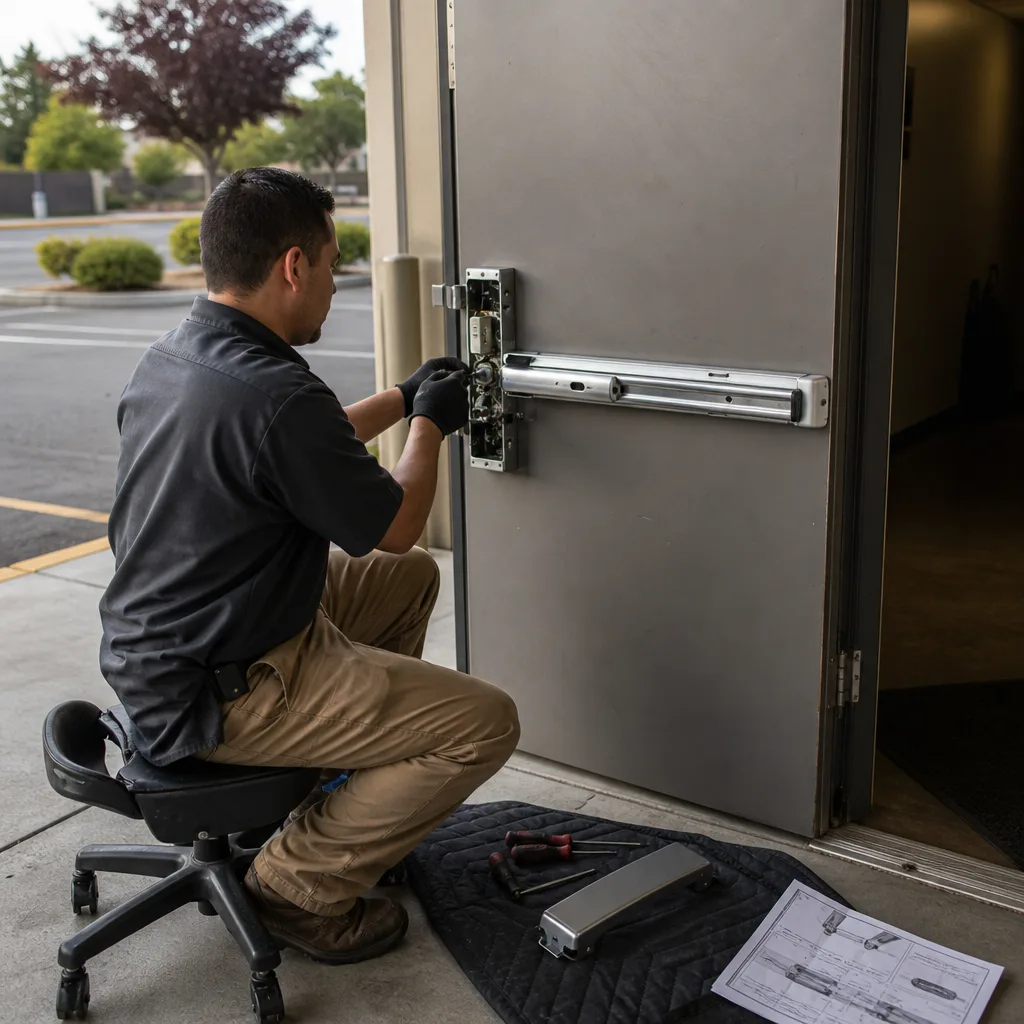
The bait-and-switch locksmith call follows a predictable script that has been refined across the San Jose metro area through years of consumer complaints and minimal regulatory enforcement. Understanding the sequence allows you to interrupt it at any point.
Stage 1: The Low Service Fee
The advertisement or dispatcher quotes a service fee of $15-$35. This is not the total price. It is often described as a “trip charge” or “service call fee.” What is not stated: this fee covers only the technician’s arrival, not any labor, and the labor rate will be disclosed only after the technician is on site. In San Jose, legitimate residential lockout labor typically runs $85-$150 total for standard hours, with after-hours emergency service at $150-$220. Any quoted service fee under $50 should trigger immediate skepticism.
Stage 2: The Labor Rate Reveal
Upon arrival, the technician announces a labor rate of $150-$250 per hour, with a one-hour minimum, plus the service fee. The lockout that was quoted at $35 is now $185 minimum before any work begins. This reveal is timed to occur after you have already invested time waiting and after the technician is physically present, exploiting sunk-cost psychology.
Stage 3: The Hardware Upgrade
The technician “discovers” that your lock is “low security” or “easily bumped” and recommends replacement with a “high-security cylinder.” The quoted price for this hardware: $200-$350, often for a standard Schlage or Kwikset product available at any San Jose hardware store for $35-$75. The term “high-security” is used deceptively; true high-security cylinders (Medeco, Mul-T-Lock, Abloy) are distinct products with patent-protected keyways and drill-resistant inserts, not standard hardware with a markup.
Stage 4: The Special Key Blank
If a rekey or key duplication is involved, the technician announces that your lock requires a “special” or “restricted” key blank costing $25-$50 per key. Standard Kwikset and Schlage key blanks cost $2-$5. True restricted keyways (Sargent, certain Mul-T-Lock systems) require authorization and are not sold by itinerant technicians out of unmarked vehicles.
Stage 5: The After-Hours Surcharge
Even for calls placed at 3:00 PM, the technician may claim the rate is “after hours” because “evening rates start at 2:00.” Legitimate locksmiths in San Jose define after-hours clearly: typically 6:00 PM to 8:00 AM weekdays, with weekend and holiday rates published in writing.
How to Interrupt the Sequence
- Before scheduling, ask: “What is the total price to open my door, including all labor and fees, if the lock is a standard residential deadbolt?”
- Request the answer in writing via text or email. A legitimate dispatcher will provide it. A bait-and-switch operation will refuse or deflect.
- Upon arrival, before the technician touches your lock, state: “I was quoted $X total. I am authorizing work only at that price. Please confirm in writing.”
- If the price changes at any point, stop the work. You are not obligated to continue, even if the technician has begun.
At Novak Lock & Security San Jose, Haven Standard Clause 1 prohibits price changes after dispatch. The dispatcher quotes a firm total price. The technician is contractually prohibited from altering it. This rule has separated our operation from bait-and-switch practices since 2002.
Identity Verification: What to Ask Before the Technician Touches Your Lock
California law requires every locksmith technician to carry a Bureau of Security and Investigative Services (BSIS) registration card. This is not optional. It is not replaced by a business card, a company ID, or a uniform patch. The BSIS card is the only credential that verifies the individual has passed a state background check and is legally permitted to perform locksmith work in California.
What the BSIS Card Looks Like
The card is wallet-sized, issued by the California Department of Consumer Affairs, and contains: the technician’s photograph, full legal name, registration number (format: L followed by digits), expiration date, and the BSIS seal. It is not laminated paper printed by a company. It is state-issued identification.
What to Ask at the Door
- “May I see your BSIS locksmith registration card?” Not “ID.” Not “business card.” The specific card.
- Note the registration number. You can verify it at Breeze.ca.gov while the technician waits.
- Ask: “What is the name of the company that employs you?” Cross-check this against the company you called. Many bait-and-switch operations use multiple business names and route calls through centralized dispatch services that send whichever technician is available.
- Request a written estimate before work begins, with the company name, technician name, BSIS number, and total price.
In San Jose, we have encountered customers who called one company name and received a technician claiming to work for another, with no clear explanation. This is a common dispatch-layer obfuscation tactic. If the company name at your door does not match the company you called, do not proceed. The liability and warranty chain is broken.
Our technicians carry BSIS cards, wear uniforms with the Novak name, and arrive in marked vehicles. Every visit includes a documented photo record left with the customer, showing the technician, the work performed, and the condition of the hardware. This is not a promise. It is Haven Standard procedure.
Vehicle and Equipment: What a Legitimate Locksmith Brings to Your Door
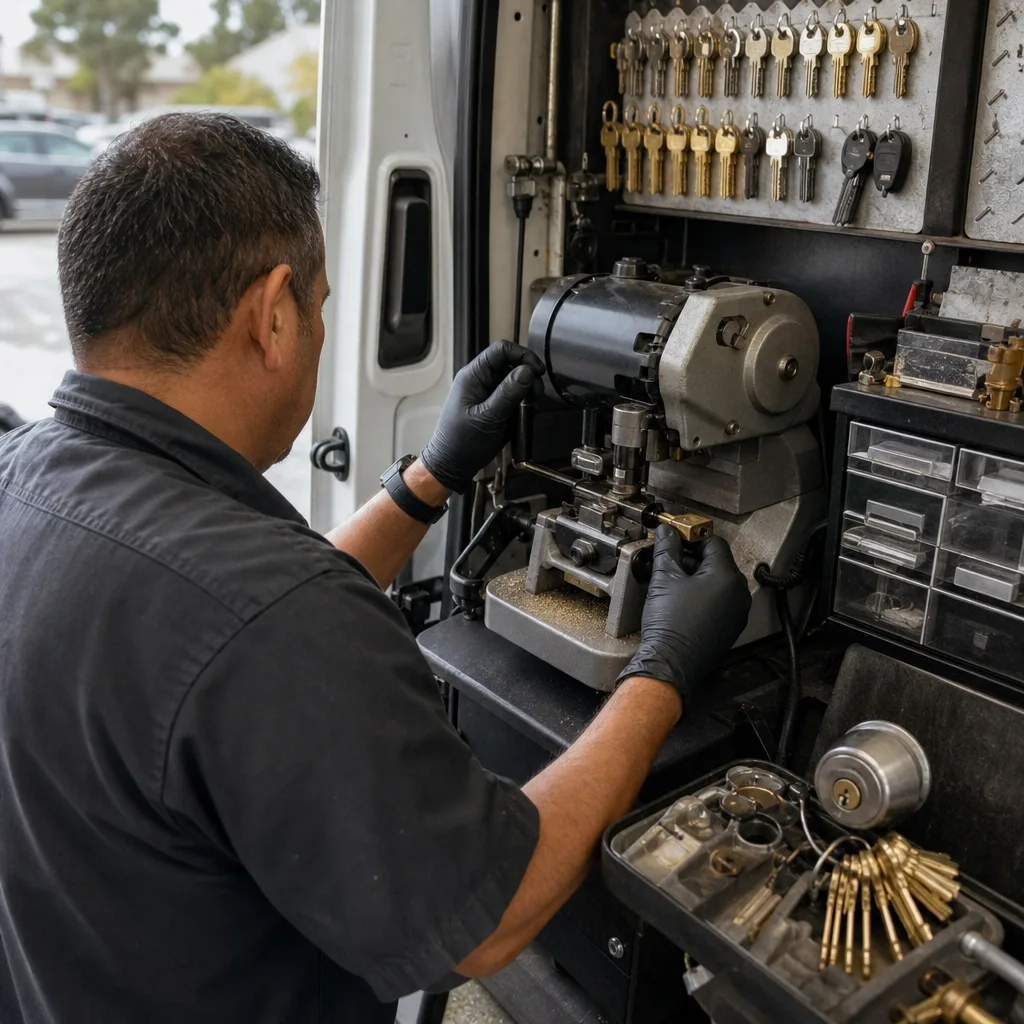
The vehicle tells a story that the technician may not. In our experience across San Jose, from Willow Glen to Almaden Valley to the Rose Garden, the legitimate mobile locksmith operates from a van or service vehicle that carries the tools and inventory to complete common jobs without returning to a shop.
What You Should See
- A marked vehicle with the company name, phone number, and California contractor license number (if applicable for security system work). Unmarked personal vehicles are a significant red flag.
- Organized key cutting equipment, including a code machine or duplicator capable of originating keys by code rather than merely copying existing keys.
- Stock of common residential and commercial cylinders, including Schlage, Kwikset, and entry-grade hardware, plus high-security options for customers who request them.
- Specialized picking tools, scope tools for decoding, and drill equipment reserved for genuine destructive-entry situations.
- Uniformed technician with visible company identification and BSIS card.
What Should Concern You
- A personal sedan or SUV with no company markings, magnetic signs, or temporary decals.
- No key cutting equipment visible; the technician offers to “go get a key made” after disassembling your lock, extending the job and your vulnerability.
- No inventory of replacement hardware; the technician must “order parts” for any replacement, suggesting they are not equipped for standard work.
- Out-of-area license plates with no local business address. Many bait-and-switch operations rotate technicians through multiple metro areas.
San Jose’s spread-out geography, from the dense downtown corridors to the hillside developments off Sierra Road, means response times vary. But the vehicle that arrives should match the business you researched. If you called a San Jose-based operation and a technician arrives in a vehicle with Los Angeles or Fresno plates and no local address, ask for an explanation before allowing access to your property.
How to Document and Report a Predatory Locksmith in San Jose
If you encounter a predatory locksmith, documentation protects you and creates a record that helps regulators identify patterns. The San Jose metro area falls under multiple jurisdictions, and the right complaint to the right agency matters.
Step 1: Document Before the Technician Leaves
- Photograph the technician, their vehicle, and any business materials they provide.
- Photograph the invoice or estimate, even if you refuse to pay. This creates a paper trail.
- Note the exact time of arrival, the company name stated, and any name changes during the interaction.
- If drilling was performed, photograph the drilled lock before disposal. This evidence supports a complaint that destructive entry was unnecessary.
Step 2: File with the Bureau of Security and Investigative Services (BSIS)
BSIS regulates locksmith registration in California. File online at the Department of Consumer Affairs website. Include: the technician’s BSIS number (if shown), company name, date and location of service, and a narrative of the pricing discrepancy or unnecessary drilling. BSIS can suspend or revoke registrations and assess fines.
Step 3: File with the California Attorney General
The Attorney General’s office tracks patterns of consumer fraud across the state. Use the online complaint form at oag.ca.gov. Select “Consumer Protection” and describe the bait-and-switch pricing sequence. Multiple complaints against the same business name or dispatch number trigger investigative attention.
Step 4: File with the Better Business Bureau
Use the specific category “Locksmith” under Home Services. The BBB’s complaint process creates a public record and assigns a case number. Businesses that accumulate unresolved complaints receive rating downgrades that affect their visibility in search results. Include your documentation and the specific dollar discrepancy between quoted and invoiced amounts.
Step 5: Dispute the Charge
If you paid by credit card, contact your issuer to dispute the charge as “services not as described.” Provide your documentation. Credit card disputes create merchant account pressure that predatory operations actively avoid.
Step 6: Report to Local Law Enforcement (If Appropriate)
If the technician refused to leave your property, threatened you, or damaged property beyond what was authorized, contact the San Jose Police Department non-emergency line. False imprisonment and criminal threats are separate from civil consumer disputes.
At Novak Lock & Security San Jose, we provide a Free Second Opinion on Any Written Estimate. Bring us a competitor’s quote and we will review it at no charge, identifying unnecessary work and inflated pricing. This service exists because we have reviewed estimates from predatory operators that listed $280 for a standard Schlage deadbolt installation that we perform for $95-$140, quoted in writing before we start.
Choosing a Legitimate Locksmith: Red Flags vs. Green Flags
The following table summarizes the distinctions that separate predatory from legitimate locksmith operations in the San Jose market.
| Factor | Red Flag | Green Flag |
|---|---|---|
| Phone quote | Low service fee only ($15-$35); total price “depends on what we find” | Firm total price for described work, provided in writing before dispatch |
| Vehicle | Unmarked personal vehicle; out-of-area plates | Company-marked service vehicle with local business identification |
| Technician ID | Business card only; refuses to show BSIS card | BSIS registration card presented without request; uniformed appearance |
| Lock opening method | Drilling proposed immediately, without picking attempt | Picking attempted first; drilling only after documented failure with customer authorization |
| Hardware pricing | “High-security” label applied to standard hardware; prices 3-5x retail | Specific brand and model named; price comparable to retail plus reasonable labor |
| Documentation | Handwritten receipt only; no company name or license number | Written estimate before work; detailed invoice with company name, technician name, BSIS number, and warranty terms |
| After-hours definition | Vague or shifting; “evening rates start at 2 PM” | Clear published hours: standard, evening, weekend, holiday |
| Payment pressure | Cash preferred; refusal to provide receipt; immediate demand for payment before work completion | Multiple payment methods accepted; payment upon satisfactory completion; detailed receipt provided |
The green flags describe our operation at Residential Locksmith in San Jose and Commercial Locksmith in San Jose. The red flags describe patterns we have observed in customer reports and second-opinion reviews across the San Jose metro area since 2002.
Common Mistakes to Avoid
- Searching only by proximity. Google Maps sorts by distance, not legitimacy. A predatory operation with a virtual address near your San Jose neighborhood can outrank a legitimate business. Verify credentials independently, not through the ad platform.
- Accepting “I’ll tell you when I get there” pricing. This phrase is the hallmark of bait-and-switch operations. A legitimate locksmith can describe common scenarios and quote firm prices for them. The variable is the lock type, which you can describe over the phone.
- Allowing work to begin before written authorization. Once the technician has disassembled your lock, you are committed. Get the scope and price in writing before the first tool touches your door.
- Confusing a business card with a license. Anyone can print a business card. The BSIS card is the only credential that matters under California law. Ask for it specifically.
- Paying cash without a detailed receipt. Cash payments without documentation remove your ability to dispute charges or establish a warranty claim. Legitimate businesses provide detailed receipts regardless of payment method.
- Assuming drilling means expertise. Drilling a standard residential lock is not advanced technique. It is destruction that any person with a drill can perform. The skill is in opening the lock without drilling.
- Ignoring neighborhood-specific risks. In San Jose’s older neighborhoods like Japantown, Rose Garden, and parts of Willow Glen, original hardware from the 1950s-1970s may have obsolete keyways. A legitimate locksmith will identify this over the phone and stock appropriate replacement options, not drill and replace with incompatible modern hardware.
When to Call a Professional
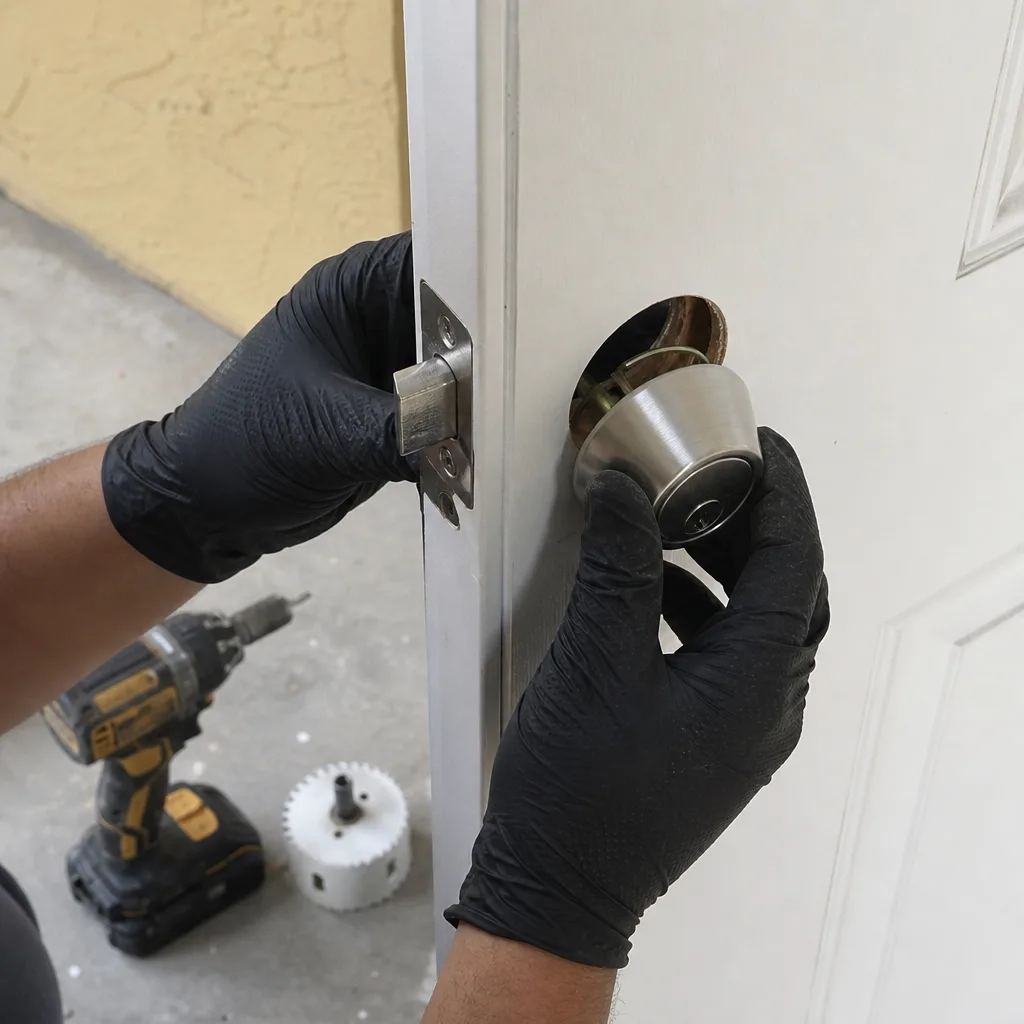
Call a professional locksmith when you are locked out, when keys are lost or stolen, when moving into a new home, when a lock malfunctions, or when you need security assessment for insurance or personal safety requirements. In San Jose, where home values in neighborhoods like Silver Creek, Almaden Valley, and Willow Glen regularly exceed $1.5 million, the cost of professional rekeying ($85-$150 for a typical home) is negligible against the risk of unauthorized entry or insurance denial after an incident. See our Seasonal Locksmith Care for San Jose: Year-Round Homeowner’s Guide for maintenance timing.
Novak Lock & Security San Jose offers free estimates in San Jose. Call (669) 201-7095. We answer with a live person, 24/7. The dispatcher will quote a firm price for your described situation, and the technician is contractually prohibited from changing that price at your door. Every visit includes a documented photo record and is performed by a background-checked, uniformed technician working to The Haven Standard.
Frequently Asked Questions
A standard residential lockout in San Jose typically costs $85-$150 during standard hours and $150-$220 for after-hours emergency service. Rekeying runs $19-$35 per cylinder plus a service call, and deadbolt installation ranges $95-$175 depending on hardware grade and door condition. At Novak Lock & Security San Jose, we quote the complete price on the phone before dispatch, and Haven Standard Clause 1 prohibits any change at your door. Call (669) 201-7095 for an exact quote; estimates are free.
Yes, if you are calling Novak Lock & Security San Jose. Haven Standard Clause 1 states that the price quoted by the dispatcher is the price on the invoice. Our technicians are contractually prohibited from adding charges, surcharges, or “discoveries” after arrival. This rule has been in place since 2002. If you are calling another locksmith, ask specifically: “Is this the total price, including all labor and fees, and will the technician be permitted to change it?” If the answer is not a clear yes, the price is not firm.
Response times in San Jose vary by location and time of day. From our dispatch point, typical arrival ranges from 20 minutes for downtown and central San Jose to 45 minutes for outlying areas like Morgan Hill or the eastern hills. We do not quote impossible times to secure calls. When you call (669) 201-7095, the dispatcher will give you a realistic arrival window based on current technician locations and traffic conditions.
Ask to see the BSIS (Bureau of Security and Investigative Services) registration card. Every legal locksmith technician in California must carry this card. Verify the registration number at Breeze.ca.gov. A business card, company ID, or uniform is not sufficient. If the technician refuses to show the BSIS card or becomes defensive when asked, do not allow work to begin.
Drilling should be rare for standard residential locks. Ask the technician to attempt picking first, and request that the attempt be documented in writing before drilling proceeds. Legitimate drilling situations include: a broken internal mechanism with no keyway function, a key snapped off flush in the cylinder, or a high-security cylinder with pick-resistant features that have been confirmed present. For a standard Kwikset or Schlage deadbolt installed in a typical San Jose home, drilling is almost never necessary. If drilling is proposed immediately, without diagnostic explanation, decline and call another locksmith.
Document everything: photograph the invoice, the technician, and the vehicle. Note the company name, time, and amount discrepancy. File complaints with BSIS (for unlicensed practice), the California Attorney General (for consumer fraud patterns), and the Better Business Bureau under the “Locksmith” category. Dispute the credit card charge if applicable. Then contact Novak Lock & Security San Jose for a Free Second Opinion on Any Written Estimate, or browse more guides & resources to protect yourself. We will review the scope and pricing at no charge and advise whether the work was necessary and fairly priced.
The Bottom Line
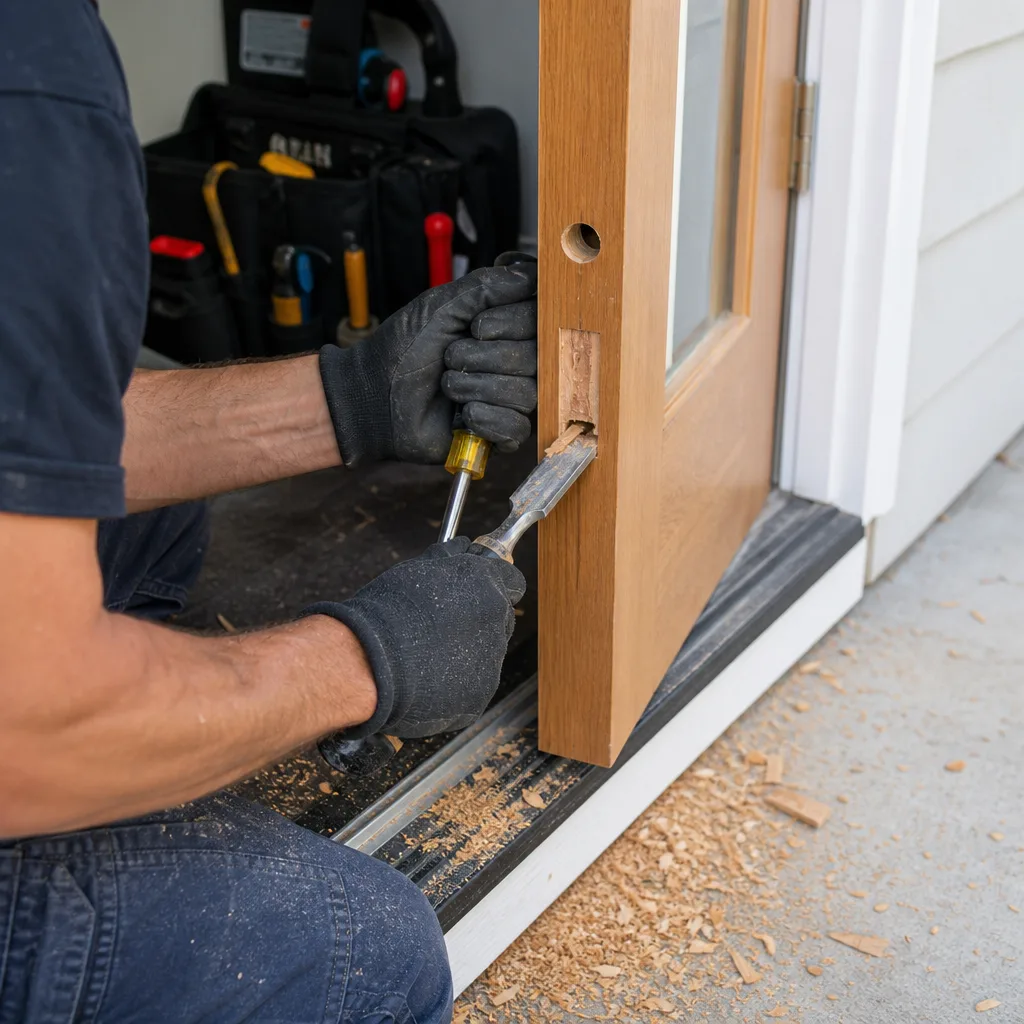
The warning signs of a predatory locksmith are specific and observable: a quoted service fee under $50, refusal to commit to a total price, an unmarked vehicle, no BSIS card, and immediate drilling proposals. The countermeasures are equally specific: demand a firm written price before dispatch, verify the BSIS registration at your door, require picking attempts before drilling authorization, and document everything if red flags appear. In San Jose’s competitive locksmith market, the legitimate operator welcomes scrutiny. The predatory operator depends on your hesitation to ask hard questions before the work begins. At Novak Lock & Security San Jose, we have built our operation since 2002 on the principle that the price on the phone is the price on the invoice, documented, verifiable, and non-negotiable. That is The Haven Standard. It is not a slogan. It is the procedure applied to every one of the 60,000+ locks, keys, and systems we have installed or serviced.
Need a second opinion on a locksmith estimate? Locked out and want a firm price before anyone is dispatched? Call Novak Lock & Security San Jose at (669) 201-7095. We answer live, 24/7, and we quote in writing before we start.
Written by Daniel Novak, Owner at Novak Lock & Security San Jose, serving San Jose since 2002.