
Last updated September 25, 2026
Non-destructive entry first, always - and we re-key Schlage, Kwikset, and Baldwin locks on the spot while you watch
You get a price before we start. It does not change when we arrive. No surprises.
Locksmith Permits, Codes & Inspections in CA: What You Need to Know
Replacing a lock cylinder requires no permit. Installing an access control system tied to your building’s electrical panel in San Jose might require three - and most locksmiths who do both jobs won’t tell you where the line is. California is one of only a handful of states that licenses locksmiths at the state level through the Bureau of Security and Investigative Services (BSIS), yet in twenty-two years of working in Santa Clara County, we’ve met plenty of customers who never thought to ask for a registration number. This guide explains exactly what BSIS requires, what San Jose building codes add, and when your locksmith project crosses into territory that demands permits, inspections, or additional licensed trades. For more guides & resources, visit our blog.
Quick Answer
California requires all locksmiths to hold a BSIS locksmith registration (employee) or a C-28 Lock and Security Equipment contractor license. Simple lock rekeys and hardware swaps need no permit. Access control systems, electrified door hardware, and any work connecting to a building’s electrical system in San Jose typically require a building permit and may need a C-10 electrical contractor. Always verify BSIS registration before hiring, and always get the scope and price in writing before work begins.
Table of Contents
- BSIS Licensing Tiers: Employee Registration vs. Contractor License
- Where Locksmith Work Ends and Electrical Work Begins
- San Jose Building Permit Triggers for Lock and Access Work
- California Penal Code 466: Lockpicking Tools and Required Documentation
- What to Do If a Locksmith Worked Without BSIS Registration
- A Six-Point Checklist Before You Hire
- Common Mistakes to Avoid
- When to Call a Professional
- Frequently Asked Questions
BSIS Licensing Tiers: Employee Registration vs. Contractor License
California operates a two-tier system for locksmith credentials, and the distinction matters for what a person is legally allowed to do on your property.
Locksmith Employee Registration is the entry-level credential. It requires a criminal background check through the California Department of Justice and FBI, fingerprinting, and a $25 registration fee renewed every two years. A registered employee may perform lock opening, lock repair, rekeying, and installation of mechanical and battery-operated hardware. They must work under the supervision of a C-28 licensed contractor or a registered locksmith who owns the business. The registration number begins with “L” followed by digits, and the holder must carry the pocket card while working.
C-28 Lock and Security Equipment Contractor License is issued by the Contractors State License Board (CSLB), not BSIS. It requires four years of journey-level experience, passing trade and law exams, a $15,000 bond, and workers’ compensation insurance if the contractor employs others. A C-28 licensee may bid jobs over $500, employ registered locksmiths, and contract directly with property owners. The C-28 scope specifically covers “locks, safes, vaults, and related security equipment including closed-circuit television systems, access control systems, and burglar alarms.”
Here is where competitors often muddy the water: a C-28 license does not authorize electrical work beyond low-voltage wiring integral to the security system itself. The CSLB has issued multiple citation advisories clarifying that running 120V power to a door operator or tapping into a building’s electrical panel exceeds C-28 scope and requires a C-10 Electrical Contractor or the appropriate low-voltage classification.
In our experience serving San Jose since 2002, most residential rekeys and lock replacements fall cleanly within registered-employee scope. Commercial access control projects in downtown San Jose high-rises or the Berryessa business district almost always need a C-28 contractor at minimum, and frequently require coordinated electrical permitting. See our Commercial Locksmith Maintenance Checklist for San Jose Homeowners for ongoing system care.
Key distinction: A handyman who installs a deadbolt from the hardware store is not committing a crime. A person who advertises locksmith services, responds to lockout calls, or rekeys cylinders without BSIS registration is operating illegally in California. The registration requirement is what separates a security professional from someone with a screwdriver and a business card.
Where Locksmith Work Ends and Electrical Work Begins
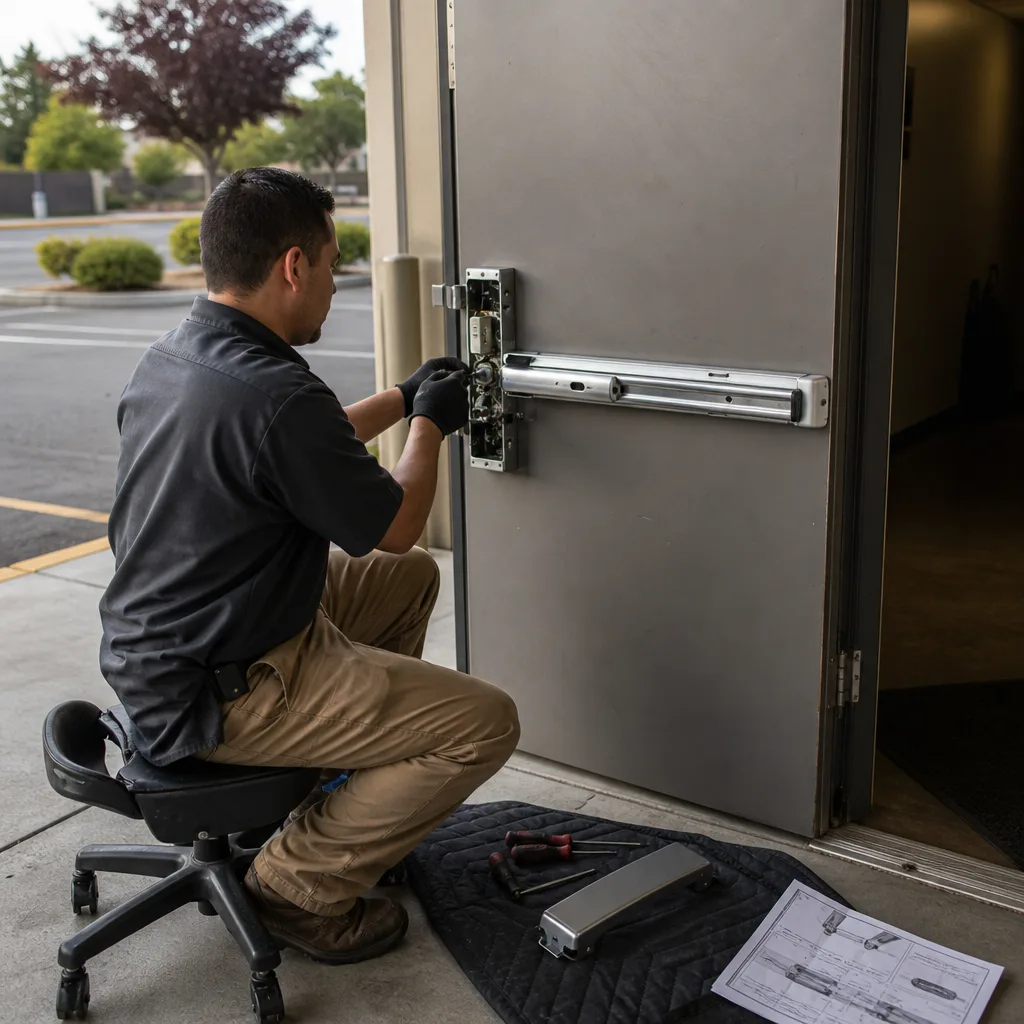
The boundary between locksmith scope and electrical contractor scope is the most expensive gray area in our trade. Misclassify the work, and your project gets red-tagged by a San Jose building inspector. Or worse, your locksmith damages building wiring and disappears.
Pure locksmith work (no electrical permit needed):
- Mechanical deadbolt and lever installation on existing prepped doors
- Rekeying of pin-tumbler, wafer, or disc-detainer cylinders
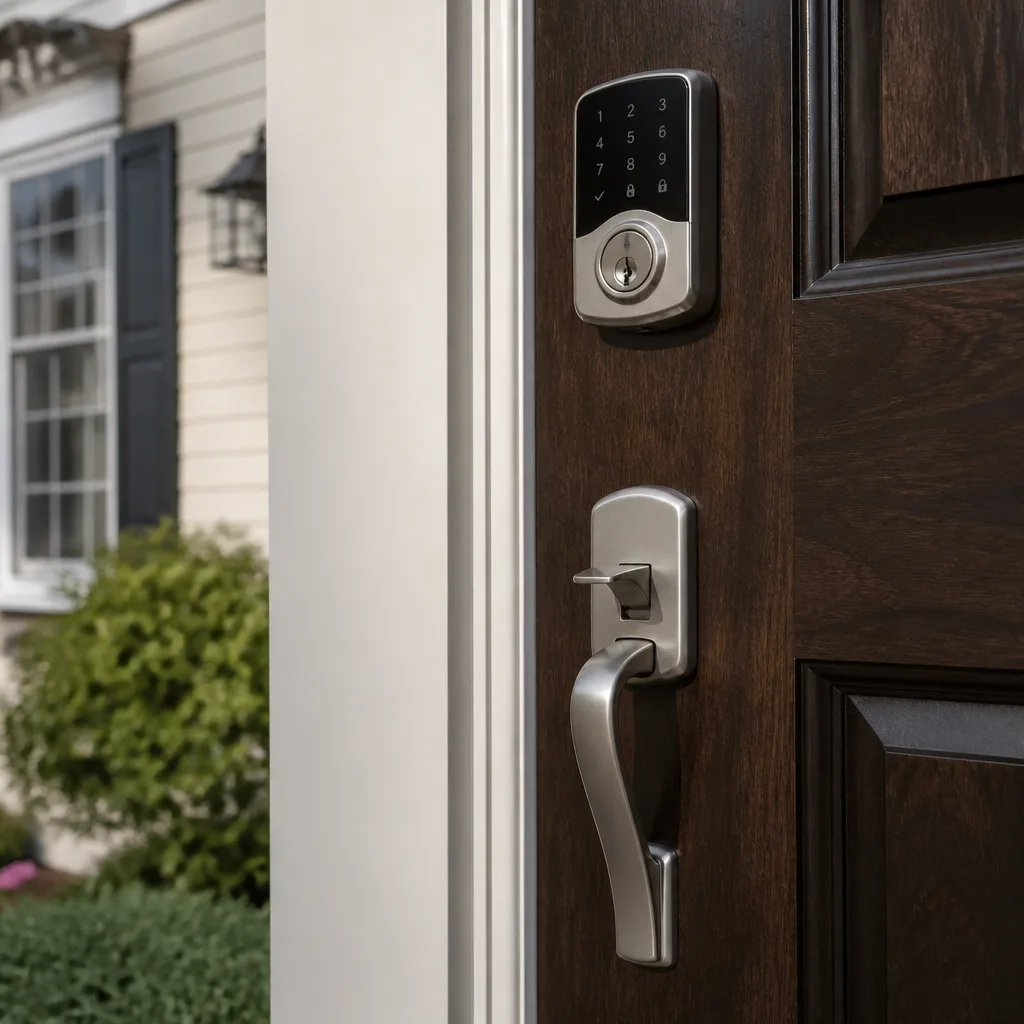
- Installation of battery-operated smart locks (August, Yale Assure, Schlage Encode) that use standard cylindrical door prep and no external power supply
- Replacement of mortise lock bodies in existing mortise pockets
- Installation of mechanical push-button locks (Simplex, Kaba)
- Safe servicing and combination changes
Work requiring electrical or low-voltage coordination:
- Hardwired electric strikes or magnetic locks connected to building power
- Access control panels mounted in electrical closets with 120V transformer supplies
- Power transfer loops (electrified hinges or door cords) carrying voltage across the door frame
- Integration with fire alarm systems for automatic door release
- PoE (Power over Ethernet) access controllers that connect to building network infrastructure and draw power from switchgear
San Jose’s climate adds a practical consideration we see regularly. The temperature swings between warm days and cool nights in the Santa Clara Valley cause expansion and contraction in door frames. Electrified hardware installed without proper voltage regulation or surge protection fails prematurely. A C-28 contractor working to code will specify UL-listed power supplies with battery backup. A handyman running Romex to a magnetic lock creates both a code violation and a fire risk.
For access control systems in San Jose, we coordinate with C-10 electrical contractors on the power side and handle the security programming and hardware mounting ourselves. The customer receives one written scope from Novak Lock & Security, but the electrical permit and inspection are handled by the appropriately licensed trade. This is standard practice on commercial jobs in North San Jose’s R&D corridor and in the Santana Row retail complex.
Smart lock nuance: A Wi-Fi smart lock that screws into a standard cylindrical bore and runs on four AA batteries is locksmith scope. The same lock model hardwired to eliminate battery changes crosses into electrical work. We specify the battery version for most San Jose residential customers in Willow Glen and Almaden Valley unless the home has a dedicated low-voltage doorbell transformer that can be safely tapped.
San Jose Building Permit Triggers for Lock and Access Work
San Jose follows the California Building Code (CBC) and California Residential Code (CRC) with local amendments administered by the San Jose Building Division. Not every lock change needs a permit. Several specific scenarios do.
No permit required:
- Direct replacement of a lock or latch in the same door prep with no modification to the door, frame, or fire rating.
- Rekeying of existing cylinders.
- Installation of battery-operated standalone access devices on non-fire-rated doors.
- Replacement of like-for-like exit hardware on existing doors, provided the door is not part of a required egress path in an assembly occupancy.
Building permit required in San Jose:
- Installation of new door openings or modification of existing openings in rated walls.
- Installation of electric strikes, magnetic locks, or electrified exit devices on fire-rated doors - requires fire-rated hardware listing and often a fire inspector sign-off.
- Access control systems in commercial occupancies that modify egress paths or require integration with the building’s fire alarm system.
- Any work requiring new electrical circuits, junction boxes, or conduit in walls - triggers both building and electrical permits.
- Modification of ADA-compliant door hardware in public accommodations - must maintain compliance with CBC Chapter 11B.
San Jose’s historic districts, particularly the Hensley Historic District and parts of Naglee Park, add another layer. Properties designated as historic landmarks require Historic Landmarks Commission review for exterior door modifications, including hardware changes that alter the visible character. We’ve handled rekeys and internal hardware upgrades in these homes that required no review, but replacing a vintage mortise lock with a modern escutcheon would.
The permit fee schedule in San Jose runs approximately $200-$400 for minor commercial access control permits, plus plan check fees if the project exceeds $5,000 valuation. Electrical permits are separate and based on the number of circuits and fixtures. A typical three-door access control installation in a San Jose office suite runs $300-$600 in total permit costs when both building and electrical permits are required.
Reputable C-28 contractors in San Jose pull permits before work begins. If your locksmith says “we’ll handle it after,” that is a red flag. The San Jose Building Division can issue stop-work orders and red-tag active jobs. The property owner, not the contractor, receives the citation in most cases.
California Penal Code 466: Lockpicking Tools and Required Documentation
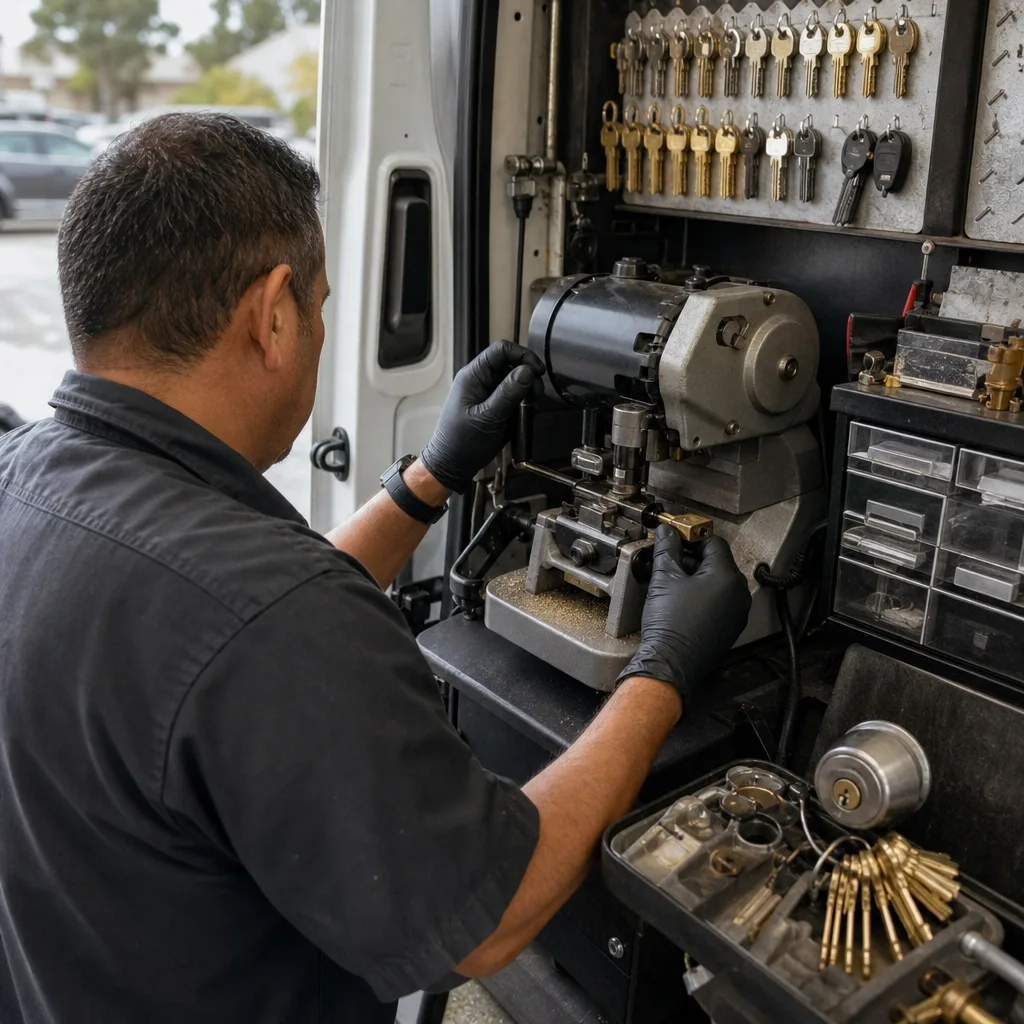
California Penal Code Section 466 makes it a misdemeanor to possess “burglar’s tools” with intent to commit burglary. The statute explicitly includes “picklock, key bit, crowbar, screwdriver, vise grips, pliers, punch, chisel, or other instrument or tool” adapted for forcible entry. For locksmiths, this creates a legal paradox: our trade requires tools that are criminal evidence in another context.
The exemption is straightforward but precise. BSIS-registered locksmiths and C-28 licensed contractors are exempt from PC 466 when the tools are possessed in the course of their business. The exemption is not automatic. It requires documentation.
What a legitimate California locksmith must carry on every job:
- Current BSIS registration card (employee) or CSLB pocket license (contractor)
- Company identification with photograph
- Proof of insurance or bonding, if applicable to the license type
We also carry a copy of our written service agreement template, though this is not legally required. It is our documentation practice under The Haven Standard.
The exemption applies only during work hours and in connection with locksmith services. A registered locksmith carrying picks at a bar after hours has no protection. More relevant to San Jose customers: an unregistered person claiming to be a locksmith who picks your lock and damages the cylinder has committed two crimes - operating without a license and possessing burglar’s tools.
We’ve been called to rekey homes in San Jose’s Rose Garden neighborhood after “locksmiths” from out-of-area phone numbers drilled cylinders that should have been picked, then demanded cash payment. Learn how to spot these operators early in our Locksmith Warning Signs: A San Jose Homeowner’s Reference Guide. In two cases, the customers later learned the individuals had no BSIS registration. One victim filed a complaint with BSIS enforcement; the other filed a police report for PC 466 possession. Neither recovered their money.
The documentation requirement is why our technicians leave a written invoice with the BSIS registration number printed on it, and why we photograph every job. The photo record is for the customer’s security documentation. The written invoice with registration number is for legal verification.
What to Do If a Locksmith Worked Without BSIS Registration
California’s locksmith licensing has existed since 1991, yet enforcement remains complaint-driven. BSIS does not patrol job sites. An unregistered operator works until someone reports them.
Step-by-step complaint process:
- Document everything immediately. Gather the invoice, business card, text messages, and any photos of the technician or vehicle. Note the date, time, and address of service.
- Verify the registration status. BSIS maintains a public license lookup at https://www.bsis.ca.gov/Consumers/LicenseLookup.shtml. Enter the name or registration number from the invoice. If the number is missing, invalid, or belongs to someone else, you have confirmed the violation.
- File a complaint with BSIS. Submit the online complaint form with your documentation. BSIS enforcement investigates and can issue citations, fines, or refer for criminal prosecution. The process typically takes 60-90 days for initial response.
- Contact local law enforcement if fraud or damage occurred. Operating without a license is an administrative violation. Drilling a lock unnecessarily to inflate the bill, charging for hardware never installed, or identity theft from copied keys may be criminal.
- Dispute credit card charges if applicable. Unlicensed operators often insist on cash or Zelle. If you paid by card, the chargeback process treats unlicensed service as a valid dispute reason.
- Have the work inspected by a registered locksmith. We provide free second opinions on any competitor’s written estimate or completed work. In several San Jose cases, we’ve found improperly installed deadbolts with strike plates screwed into drywall instead of framing, or master key systems that don’t actually master-key.
Remedies available:
BSIS can fine unregistered operators up to $5,000 per violation and seek injunctions against continued operation. Criminal prosecution under Business and Professions Code Section 7598.4 is a misdemeanor. Civil recovery requires small claims court; the customer must prove damages.
The practical reality in San Jose: most unregistered operators are mobile-only with out-of-state phone numbers and no fixed address. They close one Google Business Profile and open another. This is why verification at the time of hire matters more than post-hoc enforcement. Ask for the BSIS number before you disclose your address. A legitimate locksmith provides it without hesitation.
Haven Standard Clause 1 applies here: the price on the phone is the price on the invoice. An unregistered operator cannot honor this because their business model depends on arrival-price escalation. We’ve rebuilt trust with San Jose customers who learned this distinction the expensive way.
A Six-Point Checklist Before You Hire
Use this on every locksmith call, including ours. A company with nothing to hide answers immediately.
- Verify BSIS registration or CSLB license. Ask for the number and check it online while on the call. Novak Lock & Security technicians carry both BSIS cards and company photo ID on every San Jose visit.
- Confirm the business has a physical address in California. PO boxes and virtual offices are common among bait-and-switch operations. Our shop is in San Jose; customers are welcome to visit.
- Demand a written price before dispatch. Not an estimate range that “might change.” The exact price for the described scope. Haven Standard Clause 1: the price on the phone is the price on the invoice. No exceptions since 2002.
- Ask who performs the work. Background-checked, uniformed employees or subcontractors? We use only W-2 technicians with documented training records.
- Request proof of insurance. General liability and workers’ compensation are standard for C-28 contractors. We carry both and provide certificates on request.
- Inquire about documentation. Will you receive a written invoice, warranty terms, and photo record? Our standard deliverable includes all three, with the 365-Day Done Right Promise printed on every invoice.
For residential locksmith services in San Jose, these six points prevent the majority of consumer complaints filed with Santa Clara County consumer protection.
Common Mistakes to Avoid
- Hiring based on the lowest Google Ads price. The $19 service call is a documented bait-and-switch pattern. The technician arrives, claims the lock is “high security,” and demands $300-$800. We’ve rekeyed locks in San Jose’s Cambrian Park neighborhood for customers who paid $600 to unregistered operators for a five-minute job.
- Assuming all locksmiths can handle access control. A residential rekey specialist may have never programmed a Mercury EP1502 panel or integrated with a Bosch intrusion system. Commercial access control in San Jose’s tech corridor requires specific manufacturer training. We maintain factory authorization on Mul-T-Lock, Abloy, and Sargent systems for this reason.
- Ignoring fire rating on commercial doors. Installing non-rated electric strikes on fire-rated doors voids the rating and creates liability. San Jose fire inspectors check this. We verify door labels before specifying hardware.
- Permitting the locksmith to start without a written scope. Verbal agreements are unenforceable. Our written scope specifies hardware grades, labor hours, permit responsibilities, and total price before any work begins.
- Not asking about warranty terms. Hardware warranties differ from labor warranties. A Baldwin deadbolt carries a lifetime finish warranty, but if the installer damages the door during mounting, that’s labor. Our 365-Day Done Right Promise covers both hardware defects we supplied and our installation labor.
- Skipping the BSIS check for “urgent” lockouts. Pressure to regain entry quickly leads to skipped verification. Save the BSIS lookup page in your phone now. In a lockout at 2 AM in San Jose, you’ll still have time to ask for a registration number before giving your address.
When to Call a Professional
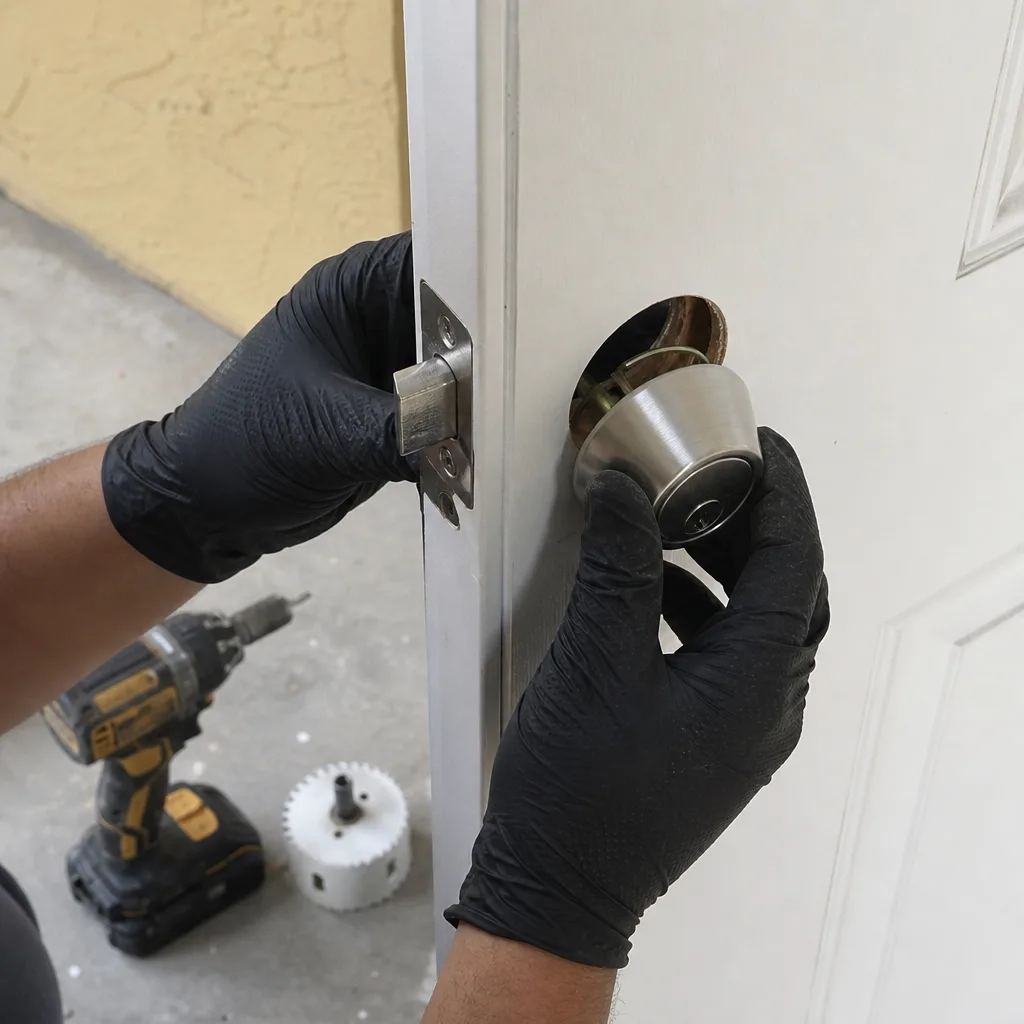
Call a licensed locksmith when the job involves security-critical hardware, warranty preservation, or code compliance. Specific scenarios: you’ve purchased a home and need all cylinders rekeyed to a single key with no prior keys in circulation; your commercial tenant has moved out and you need master key system reconfiguration; your access control system fails to release on fire alarm activation; or you’ve encountered a high-security cylinder (Medeco, Mul-T-Lock, Abloy) that requires specialized key duplication equipment.
For commercial locksmith needs in San Jose, including access control permitting and fire-rated hardware compliance, coordination with licensed trades is essential. Novak Lock & Security San Jose offers free estimates and free second opinions on any competitor’s written quote. Call (669) 201-7095. We’ll verify the scope, confirm whether permits apply, and quote a firm price in writing before anyone is dispatched.
Frequently Asked Questions
Use the BSIS public license lookup at bsis.ca.gov or the CSLB license check at cslb.ca.gov. Enter the registration or license number the locksmith provides. The search returns the name, status, expiration date, and any disciplinary actions. If the locksmith refuses to give a number or the search returns no match, do not hire them. Call Novak Lock & Security at (669) 201-7095 for a verified, written estimate instead.
No. Rekeying changes the internal pin configuration of an existing cylinder without modifying the door, frame, or hardware. It is purely locksmith scope with no building code trigger. We perform rekeys throughout San Jose’s Almaden Valley, Willow Glen, and Downtown neighborhoods with no permit requirement. A typical residential rekey runs $19-$35 per cylinder, quoted in writing before we start.
A C-28 locksmith can install battery-operated smart locks and some low-voltage integrated systems. If the smart lock requires a new 120V circuit, hardwired power supply, or connection to building fire alarm systems, a C-10 electrical contractor must perform or supervise that portion. We coordinate both trades on San Jose commercial projects so the customer receives one written scope and one point of contact.
Clause 1 states that the price quoted on the phone is the price on the invoice, and the technician is contractually prohibited from changing it at the door. This rule has been in place at Novak Lock & Security since 2002. It eliminates bait-and-switch pricing, which is the most common complaint against unlicensed locksmith operations in California.
San Jose Building Division fees for minor commercial access control permits typically run $200-$400, plus plan check fees for projects over $5,000 valuation. Electrical permits are additional. For a typical three-door office installation, total permit costs are $300-$600. We include permit costs in our written scope when they apply, with no markup. Call (669) 201-7095 for a project-specific estimate.
Document everything, verify the lack of registration through BSIS, file a complaint with BSIS enforcement, and dispute the charge if paid by credit card. For cash or Zelle payments, small claims court is your recovery path, though collection is difficult against mobile operators with no fixed address. Have the work inspected by a registered locksmith to identify any security deficiencies. We provide free second opinions on completed competitor work in San Jose.
The Bottom Line
California’s locksmith licensing creates a framework that protects consumers, but only if they use it. BSIS registration and C-28 licensing are verifiable in minutes. Building permits for access control and electrified hardware are mandatory in San Jose when the work crosses into electrical or fire-life-safety systems. The boundary between simple locksmith work and permitted construction is not intuitive, which is why reputable contractors explain it in writing before starting. Get the registration number, get the price in writing, and get the documentation that proves both. Anything less is a gamble with your property’s security and your legal exposure.
Written by Daniel Novak, Owner at Novak Lock & Security San Jose, serving San Jose since 2002.